

给定一个链表,每个节点包含一个额外增加的随机指针,该指针可以指向链表中的任何节点或空节点
给你一个长度为 n 的链表,每个节点包含一个额外增加的随机指针 random ,该指针可以指向链表中的任何节点或空节点。
构造这个链表的 深拷贝。深拷贝应该正好由 n 个全新节点组成,其中每个新节点的值都设为其对应的原节点的值。新节点的 next 指针和 random 指针也都应指向复制链表中的新节点,并使原链表和复制链表中的这些指针能够表示相同的链表状态。复制链表中的指针都不应指向原链表中的节点 。
例如,如果原链表中有 X 和 Y 两个节点,其中 X.random --> Y 。那么在复制链表中对应的两个节点 x 和 y ,同样有 x.random --> y 。
返回复制链表的头节点。
用一个由 n 个节点组成的链表来表示输入/输出中的链表。每个节点用一个 [val, random_index] 表示:
val:一个表示Node.val的整数。random_index:随机指针指向的节点索引(范围从0到n-1);如果不指向任何节点,则为null。
你的代码只接受原链表的头节点 head 作为传入参数。
示例 1:
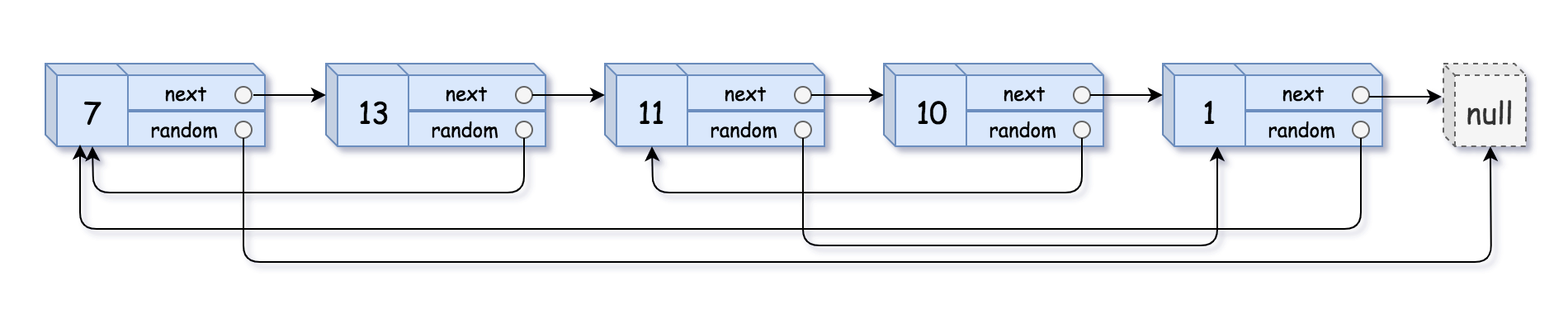
输入:head = [[7,null],[13,0],[11,4],[10,2],[1,0]]
输出:[[7,null],[13,0],[11,4],[10,2],[1,0]]
示例 2:

输入:head = [[1,1],[2,1]]
输出:[[1,1],[2,1]]
示例 3:

输入:head = [[3,null],[3,0],[3,null]]
输出:[[3,null],[3,0],[3,null]]
提示:
0 <= n <= 1000-104 <= Node.val <= 104Node.random为null或指向链表中的节点。
思路:
拷贝一个链表很简单,重新建立一个链表,一边访问原链表一边给新链表赋值就可以了,但这个 random 指针的拷贝就很靠北了。自然想到,最直观的方式必是用某种方式把新链表和旧链表节点间的对应关系记录下来,那么旧链表中 random 指针指向的节点就能通过这个记录反查到它在新链表中的节点, 把这个节点的地址赋给 random 指针就行了。
AC代码:
/*
// Definition for a Node.
class Node {
public:
    int val;
    Node* next;
    Node* random;

    Node(int _val) {
        val = _val;
        next = NULL;
        random = NULL;
    }
};
*/

class Solution {
public:
    Node* copyRandomList(Node* head) {
        if (!head) return nullptr;

        unordered_map<Node*, Node*> nodeMap;

        for (Node* p = head; p; p = p->next) {
            nodeMap[p] = new Node(p->val);
        }

        for (Node* p = head; p; p = p->next) {
            nodeMap[p]->next   = nodeMap[p->next];
            nodeMap[p]->random = nodeMap[p->random];
        }

        return nodeMap[head];
    }
};Code language: C++ (cpp)提交之后发现Leetcode上还有一种原地穿插法, 可以用常数空间占用解决这个问题。用哈希表 unordered_map<Node*, Node*> nodeMap;建立新节点需要扫描第一遍, 然后设置各个节点的 next 和 random 需要扫描第二遍。而这种做法则是第一遍直接把新节点插入到已有节点之后, 第二遍设置 random 指针, 第三遍把这个链表拆成两条并返回新的链表:
class Solution {
public:
    Node* copyRandomList(Node* head) {
        if (!head) return nullptr;

        for (Node* cur = head; cur; cur = cur->next->next) {
            Node* copy = new Node(cur->val);
            copy->next = cur->next;
            cur->next = copy;
        }

        for (Node* cur = head; cur; cur = cur->next->next) {
            if (cur->random) {
                cur->next->random = cur->random->next;
            }
        }

        Node* newHead = head->next;
        for (Node* cur = head; cur; ) {
            Node* copy = cur->next;
            cur->next = copy->next;
            cur = cur->next;
            copy->next = cur ? cur->next : nullptr;
        }

        return newHead;
    }
};
Code language: C++ (cpp)